
Your Chair Is Killing You: The Hidden Damage of Desk Sitting and What to Do About It
- doctorbiggs
- Aug 31
- 13 min read
By Dr. Andrew Biggs, DC | Principled Chiropractic | Royal Palm Beach, FL
It is not a comfortable title, but it is an accurate one, and it belongs to one of the most important books written about modern health in the past decade.
In Deskbound: Standing Up to a Sitting World, Dr. Kelly Starrett, Doctor of Physical Therapy, New York Times bestselling author, and coach to Olympic athletes and Special Forces soldiers, delivers a blunt assessment of what the modern desk-based lifestyle is doing to the human body. His conclusion, backed by the same research that has been accumulating in peer-reviewed literature for years, is as simple as it is alarming: sitting literally shortens your life.
Not sitting occasionally. Not sitting for a reasonable portion of the day. Sitting the way most working adults sit; for eight, ten, sometimes twelve hours a day, day after day, year after year, is, as Dr. Starrett puts it, murdering your body.
As a chiropractor who sees the physical consequences of prolonged desk sitting in my office every week, I can tell you that this is not hyperbole. The structural damage that accumulates in the spine and nervous system of a person who has spent decades at a desk is real, it is measurable, and it is, in many cases, preventable. It's not inevitable or just part of getting older. It's preventable, if you understand what is happening and take it seriously enough to address it.
This post is about what desk sitting does to your body, why it matters far more than most people realize, and what you can do, starting today, to begin reversing the damage.
The Scale of the Problem
Before we get into mechanics, consider the scope of the situation.
Adults in the United States spend an average of nearly ten hours a day seated. For office workers, that figure is often higher, and that is before adding the hours of sitting during commuting, meals, television, and device use that bookend the workday. When you total it all up, many working adults spend more hours each day sitting than they do doing anything else, including sleeping.
Dr. Starrett, in Deskbound, cites research showing that the typical seated office worker suffers from more musculoskeletal injuries than workers who do daily manual labor. Read that again. Sitting at a desk is more injurious than lifting heavy weights for a living. The difference is that the damage accumulates slowly, invisibly, over years rather than announcing itself with a dramatic acute injury.
Research published in the American Journal of Clinical Nutrition found that physical inactivity is a bigger risk factor for early death than smoking. Sitting for as little as two continuous hours increases the risk of heart disease, diabetes, back and neck pain, and other orthopedic problems. A meta-analysis published in the Annals of Internal Medicine found that prolonged sitting was associated with a significantly increased risk of cardiovascular disease, type 2 diabetes, and all-cause mortality, independent of leisure-time physical activity. In other words, going to the gym after eight hours at a desk does not undo the damage of the sitting. The body keeps a running tab.
What Sitting Actually Does to Your Spine
Now for the mechanics. Because understanding exactly what happens to your spine during prolonged sitting is what makes the consequences feel real and what motivates the kinds of changes that actually make a difference.
The Loss of Lumbar Lordosis
Your lumbar spine, the lower back, has a natural inward curve called the lordosis. This curve is not decorative. It is the primary mechanical shock absorber of the spine, distributing the compressive load of body weight across the full surface of each vertebra and disc rather than concentrating it in one place.
When you sit, particularly when you sit in the slightly slouched position that most people naturally adopt after the first thirty minutes in a chair, the lumbar lordosis flattens. The pelvis rotates posteriorly, the lumbar spine rounds forward, and what was a curved, load-distributing structure becomes a relatively straight column under significant compressive load.
A 2023 peer-reviewed study published in PMC found that slumped sitting significantly increases pressure on the lumbar intervertebral discs compared to erect sitting, meaning the disc itself is under dramatically greater mechanical stress in the position most people actually sit in.
Research shows that sitting increases spinal disc pressure by 40 to 90 percent compared with standing. That additional pressure, applied for hours every day, does not simply disappear when you stand up. It accumulates in the disc tissue; slowly compressing, dehydrating, and degrading the intervertebral discs that are supposed to cushion your vertebrae for the duration of your life.
Intervertebral Disc Dehydration and Degradation
The intervertebral discs of the lumbar spine have no direct blood supply. They receive their nutrition (oxygen, glucose, and the biochemical substrates needed for tissue maintenance and repair) through a process of diffusion, called imbibition, that depends on the mechanical pumping action created by movement. When you walk, bend, extend, and change position, the discs alternately compress and expand, drawing fluid and nutrients in and expressing waste products out.
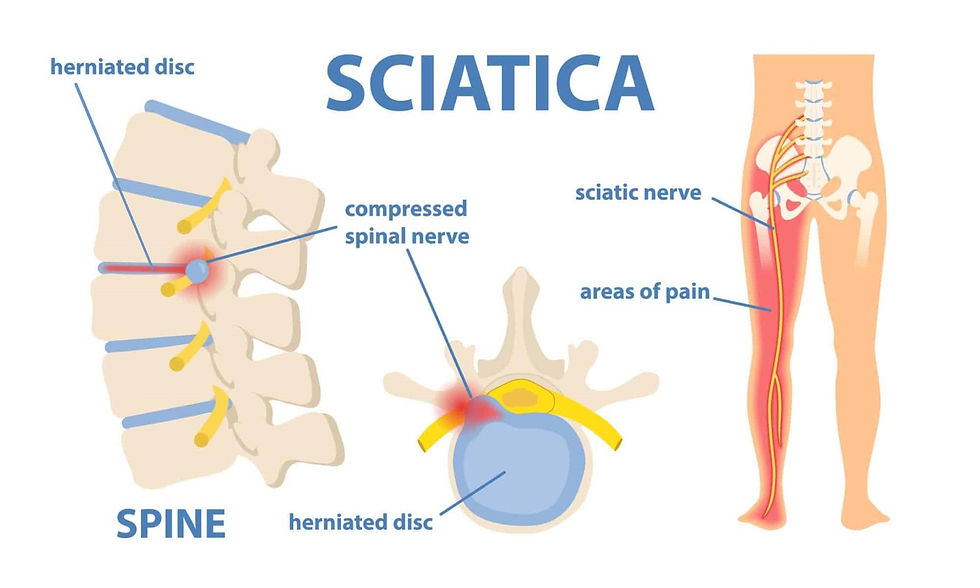
When you sit for extended periods without moving, this pumping mechanism is suppressed. The disc remains under sustained compressive load, its nutritional supply is diminished, its metabolic waste accumulates, and its capacity for self-maintenance is reduced. Over years and decades, this produces the progressive disc degeneration (reduced disc height, loss of disc hydration, and ultimately bulging or herniation) that drives so much of the chronic back pain and sciatica that we see in our practice.
Dr. Starrett describes this in Deskbound as a tissue health problem: the structures of the spine, like all living tissues, require movement to maintain their health. Deprive them of movement for long enough, and they begin to deteriorate.
Viscoelastic Creep and Spinal Instability
There is another, less-discussed consequence of prolonged sitting that the research has documented with particular clarity: viscoelastic creep in the passive spinal tissues.
The ligaments, joint capsules, and intervertebral discs of the lumbar spine are viscoelastic structures, meaning they deform gradually under sustained load and recover slowly when the load is removed. Prolonged sitting induces viscoelastic creep in these passive spinal tissues, altering lumbar curvature and modifying neuromuscular activation patterns, thereby affecting spinal stability.
In practical terms, this means that after an extended period of sitting, the passive stabilizing structures of your lumbar spine are temporarily deformed and the neuromuscular system that depends on accurate proprioceptive feedback from those structures for spinal stability is compromised. Both groups in a 2024 study (asymptomatic individuals and those with chronic low back pain) experienced a significant increase in pain intensity after just thirty minutes of continuous sitting, along with impaired ability to accurately reposition the lumbar spine.
This is why so many people experience their worst back pain episodes immediately after prolonged sitting, getting up from a desk, standing up after a long drive, or rising from a chair after an extended meeting. The spine is not simply sore from being in one position. It has undergone measurable changes in tissue mechanics and neuromuscular control that make it temporarily less stable and less able to protect itself during subsequent movement.
Hip Flexor Shortening and the Pelvic Tilt Cascade
Dr. Starrett dedicates significant attention in Deskbound to what he calls the flexion fault; the cascade of structural changes that begins when the hip flexors are held in a shortened position for hours every day.
The hip flexors, primarily the iliopsoas, which connects the lumbar vertebrae directly to the femur, are designed to move between shortened and lengthened positions as you walk, run, and move through your day. When you sit, the hip flexors are held in a chronically shortened position. Over time (research confirms that this happens within weeks to months of sustained desk work) the hip flexors adaptively shorten. They lose their capacity for full lengthening.
Shortened hip flexors are not simply tight muscles. They are structural anchors that connect the lumbar spine to the leg, and when they are chronically shortened, they pull the lumbar spine into anterior pelvic tilt and exaggerated lumbar compression during standing and walking. They disrupt the normal mechanics of the gait cycle. They contribute to lumbar hyperlordosis or, paradoxically, depending on the individual's compensatory pattern, to further loss of lordosis.
Simultaneously, prolonged sitting weakens the gluteal muscles, the primary extensors of the hip and the most powerful stabilizers of the pelvis. Research confirms that the muscle imbalances that develop from sitting (tight hip flexors, weak glutes, overworked hamstrings) disrupt pelvic and spinal alignment and worsen discomfort over time. This hip flexor-gluteal imbalance pattern is among the most common findings in adults with chronic low back pain, and it is almost entirely a consequence of the sustained hip flexion position of desk sitting.
What Sitting Does to Your Neck and Upper Back
The structural damage of desk sitting is not limited to the lumbar spine. The cervical and thoracic regions bear their own significant consequences, consequences that are driven by the forward head posture and rounded shoulder position that almost inevitably develops during computer work.
I discuss forward head posture in detail in its own dedicated post, but the essential mechanism bears summarizing here: as the screen pulls the gaze forward and downward, the head migrates forward of its neutral position over the shoulders. For every inch of forward migration, the effective load on the cervical spine increases by approximately ten pounds. At the forty-five to sixty degree forward tilt that many computer users maintain, that load reaches forty-nine to sixty pounds, often applied to the cervical spine for hours at a time.
The consequences of this sustained cervical loading include progressive loss of the normal cervical lordosis, facet joint compression and degeneration, disc degeneration at the most mobile cervical segments, and, critically, NeuroStructural Shifts in the upper cervical spine that affect the neurological pathways we discuss throughout this blog: the vagus nerve, the brainstem, the autonomic regulatory system.
The rounded shoulder position that accompanies forward head posture in desk workers produces its own cascade of thoracic consequences. The thoracic kyphosis deepens progressively. The posterior thoracic muscles become chronically overloaded and develop trigger points. The anterior chest muscles shorten and pull the thoracic spine further into flexion. The pattern of early thoracic hyperkyphosis, the rounded upper back discussed in my post on Dowager's hump, is established, often decades before it becomes visibly apparent.
Carpal tunnel syndrome, mentioned prominently in Deskbound as a preventable consequence of poor desk ergonomics, frequently has a cervical component that is entirely overlooked in conventional treatment. The nerve compression that produces carpal tunnel symptoms often originates not at the wrist, but in the cervical spine, where NeuroStructural Shifts at the C6, C7, or C8 level compromise the nerve roots that supply the hand and wrist. Treating carpal tunnel purely at the wrist without evaluating the cervical spine is, as Dr. Starrett would say, addressing the end of the hose while ignoring the kink. This was discussed in greater detail in my blog on cervical radiculopathy.
The Systemic Consequences: Beyond the Spine
Dr. Starrett's argument in Deskbound extends well beyond musculoskeletal complaints, and the research supports him on every point.
Cardiovascular consequences. Prolonged sitting suppresses the activity of lipoprotein lipase, an enzyme critical to the metabolism of triglycerides and the maintenance of healthy HDL cholesterol levels. A single day of prolonged sitting measurably reduces lipoprotein lipase activity by as much as 90 percent. This effect is independent of exercise: a person who runs five miles in the morning and then sits for eight hours has still suppressed their lipase activity for the majority of the day.
Metabolic consequences. The muscles of the lower body, when inactive in the sitting position, cease their role in glucose metabolism thus reducing insulin sensitivity and contributing to the blood sugar dysregulation that underlies type 2 diabetes. The relationship between prolonged sitting and type 2 diabetes is now one of the best-established in the epidemiological literature.
Respiratory consequences. In the slouched sitting position, the diaphragm cannot descend fully during inhalation, reducing respiratory excursion and oxygen intake. This is the same mechanism I discuss in my post on thoracic hyperkyphosis, the compression of the thoracic cage by the forward-flexed spine that limits breathing capacity. In desk workers who spend eight or more hours in a forward-flexed sitting posture, this means a significant portion of each day is spent at a reduced respiratory capacity.
Neurological and cognitive consequences. Blood flow to the brain is measurably reduced during prolonged sitting. Research has documented reductions in cerebral blood flow velocity during extended seated work, which may contribute to the afternoon cognitive fog, reduced concentration, and mental fatigue that so many desk workers experience and attribute simply to stress or insufficient caffeine.
Nervous system dysregulation. The chronic sympathetic dominance associated with the postural stress of prolonged sitting, and with the structural NeuroStructural Shifts in the cervical and thoracic spine that desk sitting accelerates, has the same downstream consequences for nervous system regulation that we discuss throughout our blog: reduced vagal tone, impaired parasympathetic function, elevated stress hormone levels, and the whole-body effects that follow from a nervous system unable to fully access its rest-and-recover mode.
What Dr. Starrett Recommends and How We Build on It
Deskbound is, at its core, a practical manual for surviving the modern work environment. Dr. Starrett's core recommendations are grounded in biomechanics and movement science, and they represent an excellent starting framework.
Reduce Total Sitting Time
Dr. Starrett's primary prescription is to spend no more than twenty to thirty minutes continuously sitting before changing position, standing, or moving. The evidence strongly supports this: the structural, metabolic, and cardiovascular consequences of prolonged sitting are significantly mitigated by regular postural changes, even brief ones.
Standing desks, adjustable sit-stand workstations, walking meetings, and deliberate movement breaks all serve this purpose. The goal is not to never sit. It is to ensure that sitting is broken up frequently enough that the viscoelastic creep, disc dehydration, hip flexor shortening, and metabolic suppression described above never accumulate to a damaging degree within a single sitting bout.
Organize and Stabilize the Spine
Dr. Starrett introduces what he calls a "ready spine," a specific spinal position that maintains the natural lordosis, organizes the pelvis in neutral, and engages the deep stabilizing musculature before and during any seated or standing work. His technique for achieving this position, a gentle hip external rotation, a mild gluteal contraction, a braced neutral lumbar curve, is described in detail in Deskbound and is worth practicing until it becomes habitual.
The key principle is that the spine needs to be actively organized during sitting, not passively collapsed into whatever position gravity produces. Most people sit on their tailbones in posterior pelvic tilt; the organized sitting position of Deskbound uses a slight anterior pelvic tilt to restore lumbar lordosis and distribute spinal load more effectively. A well-fitting chair with adequate lumbar support is a good place to start.
Address Hip Flexor Restriction
Dr. Starrett provides extensive mobilization protocols in Deskbound specifically targeting the hip flexors, hip capsule, and thoracic spine, the structures most directly affected by prolonged desk sitting. These mobility techniques, performed for as little as ten to fifteen minutes daily, begin to address the adaptive shortening and stiffness that accumulate over years of desk work.
Specific recommendations for desk workers include:
Daily hip flexor stretches targeting the iliopsoas in a true hip extension position
Thoracic extension over a foam roller or rolled towel to counteract the forward flexion of desk sitting
Regular glute activation exercises (bridges, clamshells, and hip thrusts) to address the inhibition of the gluteal muscles that occurs during prolonged sitting
Ankle and hip mobility work to maintain the full-range movement capacity that sedentary postures progressively restrict
Upgrade the Workstation
Deskbound provides specific ergonomic guidance for transforming a standard desk setup into what Dr. Starrett calls a dynamic workstation, one that supports healthy posture during sitting, facilitates easy transitions to standing, and encourages regular position changes throughout the workday.
Key workstation principles include positioning the monitor at eye level to eliminate forward head posture, ensuring the keyboard and mouse are positioned to allow relaxed shoulders and neutral wrists, using a chair height that allows the feet to rest flat on the floor with the hips at approximately ninety degrees, and, ideally, incorporating a sit-stand desk that makes alternating between sitting and standing throughout the day effortless.
Where NeuroStructural Chiropractic Care Fits In
Everything Dr. Starrett recommends in Deskbound, the postural corrections, the mobility work, the movement breaks, the workstation upgrades, is valuable and we encourage every desk worker to implement these practices. They are excellent tools for reducing the ongoing structural load being added to the spine and for maintaining the mobility needed to counteract the effects of sitting.
Here is a critical distinction: these tools work best when the spine they are working with is structurally sound to begin with. For the vast majority of adults who have been sitting at desks for years or decades, it is not.
The NeuroStructural Shifts that accumulate from years of desk sitting, the forward head posture that has become structurally established in the cervical spine, the thoracic kyphosis that has progressed beyond postural habit into actual vertebral deviation, the lumbar NeuroStructural Shifts produced by the sustained posterior pelvic tilt of desk sitting, do not reverse themselves with stretching, foam rolling, or even a standing desk. They are structural deviations in the position of the vertebrae themselves, producing neurological interference in the nerve pathways that run through and adjacent to them.
Correcting these structural deviations requires specific, precise structural adjustment, the kind that identifies the exact location and direction of each NeuroStructural Shift and applies a corrective force that restores normal vertebral position and removes the neurological interference it was creating.
This is what we do at Principled Chiropractic. Not simply to relieve the pain of desk sitting, though that is a common and welcome outcome, but to address the structural root of the neurological dysfunction that prolonged desk sitting produces. To restore the cervical lordosis that protects the brainstem and vagus nerve. To correct the thoracic NeuroStructural Shifts that compress the rib cage and the spinal cord. To address the lumbar deviations that are loading the intervertebral discs asymmetrically and driving the sciatica, disc herniation, and lower back pain that are the most direct consequences of a working life spent in a chair.
The mobility work of Deskbound maintains the health of tissues that are structurally sound. NeuroStructural chiropractic care corrects the structural deviations that mobility work alone cannot reach. Together, they represent a genuinely comprehensive approach to surviving and reversing the consequences of a desk-based modern life.
A Practical Plan for the Desk Worker
Here is what we recommend for any adult who spends significant time at a desk:
Read Deskbound. Dr. Starrett's book is practical, accessible, and packed with specific protocols for every aspect of desk-sitting rehabilitation. It belongs in the library of every office worker, and its mobility templates are worth working through systematically.
Set a movement timer. Every twenty to thirty minutes, stand, walk briefly, or perform a few hip extensions and thoracic rotations. You do not need a standing ovation; you need thirty seconds of movement. Use a phone timer, a smartwatch reminder, or a simple hourly chime. The metabolic and structural benefits of regular movement breaks are well-documented and begin immediately.
Upgrade your workstation. Evaluate your monitor height, keyboard and mouse position, and chair setup against the principles in Deskbound. A few minutes of workstation adjustment can meaningfully reduce the structural load of every hour you spend at your desk going forward.
Invest in hip flexor mobility. Five minutes of daily hip flexor work (a half-kneeling hip flexor stretch, a couch stretch, a hip capsule mobilization) begins to address the adaptive shortening that is one of the most structurally damaging consequences of prolonged sitting.
Get your spine evaluated. If you have been sitting at a desk for years and have never had a structural spinal evaluation (not just an X-ray when something hurts, but a genuine structural and neurological assessment of how your spine is functioning) you do not know the structural state of the foundation you are working with. You may be doing all the right mobility work on a spine that has already developed significant NeuroStructural Shifts that no amount of stretching will correct.
We offer a complimentary consultation for all new patients. Come in, share your history, and let us give you an honest assessment of the structural health of your spine and a clear picture of what it will take to correct what the chair has done to it.


Comments